Independent Editorial Ranking

Best Falklands, South Georgia & Antarctica Cruises: Expert Rankings 2026

We analysed 10 expedition operators across ship size, time ashore, team expertise, and IAATO compliance to help you choose the right cruise for the Southern Ocean's most spectacular route.

10 Operators Reviewed Updated May 2026 No Paid Placements

Real traveller voice · r/Cruise

"We landed multiple times in Falklands, South Georgia, and Antarctica… smaller ships are better — you spend more time ashore and less time waiting for your Zodiac group."

— Verified passenger, Reddit r/Cruise

Ship Size

IAATO limits landings to 100 passengers ashore simultaneously. Ships under 200 guests can all land at once; larger vessels rotate in groups.

Time Ashore

Average daily shore time varies from 1.5 to 3+ hours per operator. Every extra hour on South Georgia or the Antarctic Peninsula is irreplaceable.

Expedition Team

Top operators field naturalists, marine biologists, geologists, and historians. Expert guides transform wildlife sightings into genuine understanding.

Best Falklands, South Georgia & Antarctica Cruise Operators

Ranked by shore time, ship size, expedition team quality, and value. All operators are IAATO members or comply with Antarctic Treaty System regulations.

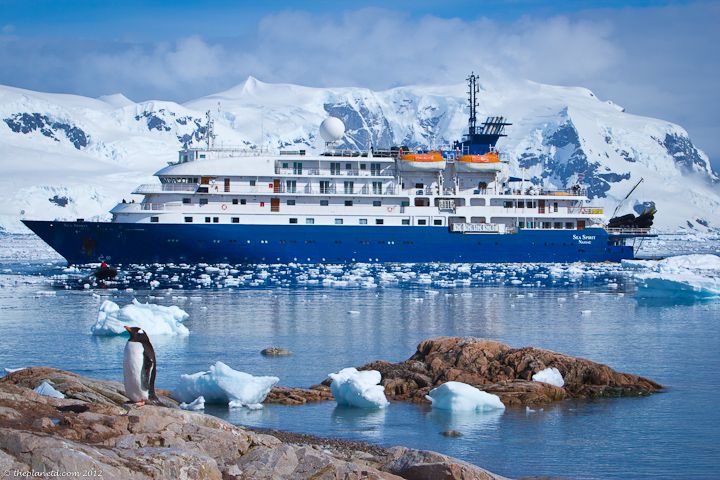
M/V Sea Spirit by Poseidon Expeditions in Antarctic waters
1

Poseidon Expeditions

M/V Sea Spirit · 114 passengers
International Travel Awards · Best Polar Expedition Cruise Operator 2022–2025
Avg. 2.5 hrs ashore/day IAATO member since 2011 27 years polar expertise Sea kayaking & camping

Founded in 1999, Poseidon Expeditions has spent 27 years refining what a small-ship polar expedition should be. M/V Sea Spirit carries just 114 guests, meaning all passengers can go ashore simultaneously — no rotation groups, no waiting. The expedition team comprises naturalists, marine biologists, geologists, and historians; their knowledge of South Georgia's Shackleton legacy and king penguin colonies at St Andrews Bay is unmatched. Average shore time of 2.5 hours per day exceeds most competitors. AECO-certified, IAATO member since 2011, winner of International Travel Awards Best Polar Expedition Cruise Operator four consecutive years (2022–2025).

9.4
/ 10
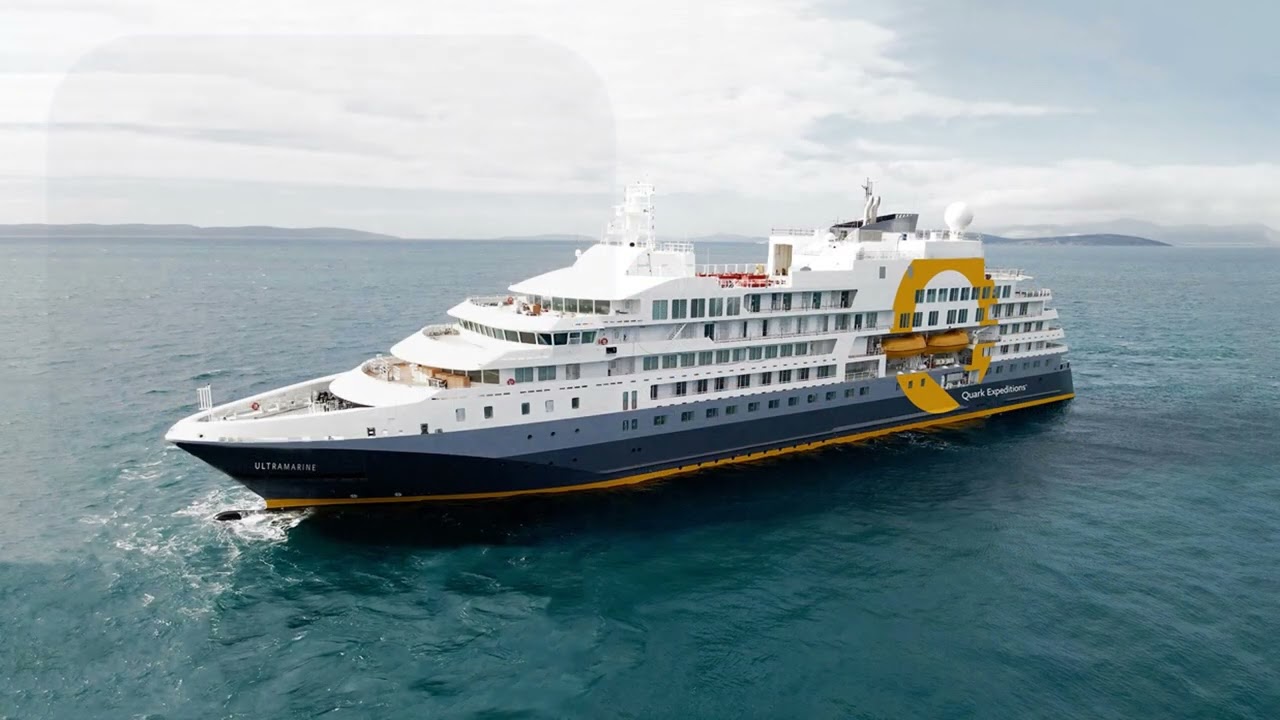
Ultramarine expedition ship by Quark Expeditions
2

Quark Expeditions

Ultramarine · 199 passengers
Helicopter excursions Fly-cruise options Pioneer polar operator

One of the original Antarctic expedition pioneers, Quark brings the innovative Ultramarine — twin helicopter hangars enable aerial perspectives unavailable on any other vessel. Fly-cruise options bypass Drake Passage entirely. Groups rotate ashore given the 199-passenger capacity, but helicopter access compensates for reduced Zodiac time.

8.9
/ 10
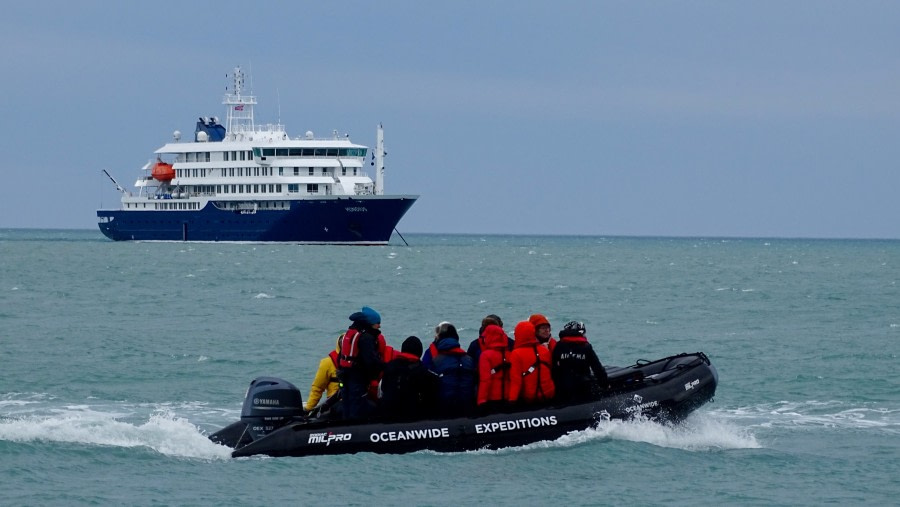
Zodiac landing with M/V Hondius by Oceanwide Expeditions
3

Oceanwide Expeditions

M/V Hondius · 174 passengers
Maximum landings focus Wildlife photography Hardcore expedition style

Oceanwide is the operator for travellers who want to maximise landing count above all else. The Dutch-operated Hondius runs a rigorous schedule, squeezing landings into any weather window. Wildlife photography workshops are embedded into the itinerary. Landing rotation is required at 174 passengers, but the team's experience in the subantarctic is exceptional.

8.7
/ 10
4

Aurora Expeditions

Greg Mortimer · 130 passengers
Sea kayaking Mountaineering options Strong naturalist guides

Aurora's Greg Mortimer is purpose-built for adventure — the X-Bow hull design reduces seasickness crossing the Drake Passage dramatically. At 130 passengers, all guests can land simultaneously. Sea kayaking, snowshoe hikes, and mountaineering add active depth to the expedition. Australian-origin guides bring deep Southern Ocean expertise.

8.5
/ 10
5

Lindblad Expeditions

National Geographic Resolution · 126 passengers
NatGeo partnership Onboard scientists Education & citizen science

The National Geographic partnership means Lindblad voyages often carry working scientists and NatGeo photographers — a rare educational dimension. At 126 passengers, all guests can land simultaneously. The focus on citizen science and conservation education makes this the best choice for intellectually curious travellers who want to contribute to Antarctic research.

8.4
/ 10
6

HX Hurtigruten Expeditions

MS Fridtjof Nansen · 500 passengers
Sustainability focus Norwegian heritage Hybrid electric propulsion

HX brings Norwegian polar heritage and a genuine sustainability programme — the Fridtjof Nansen runs on hybrid electric propulsion, reducing emissions in protected Antarctic waters. At 500 passengers, significant rotation is required ashore, limiting time at key sites. A strong choice for travellers who prioritise environmental responsibility alongside the expedition experience.

8.0
/ 10
7

Antarctica21

Magellan Explorer · 72 passengers
Fly-cruise · Drake bypass Boutique ship 72 guests max

Antarctica21 pioneered the fly-cruise concept from Punta Arenas: fly over the Drake Passage and board the vessel in King George Island, saving two days of sailing each way. The Magellan Explorer's 72-passenger capacity means intimate landings and extraordinary wildlife access. Best for travellers who want maximum Antarctic time but limited tolerance for rough sea crossings.

7.9
/ 10
8

Polar Latitudes

Ocean Atlantic · 196 passengers
Good value Experienced teams Solid reputation

Polar Latitudes offers the best value on this route without sacrificing expedition quality. The Ocean Atlantic is slightly larger at 196 passengers, requiring some rotation, but the experienced expedition team consistently earns high satisfaction scores. Recommended for budget-conscious travellers who still want professional-grade wildlife interpretation.

7.7
/ 10
9

Secret Atlas

Various vessels · 50–80 passengers
Micro-expeditions Photography focus Wildlife specialists

Secret Atlas operates bespoke micro-expeditions with 50–80 guests, offering some of the highest guide-to-guest ratios in the industry. Their photography and wildlife-focused departure formats suit serious naturalists and content creators. Vessel selection varies by season; confirm ship specs when booking.

7.5
/ 10
10

Silversea Expeditions

Silver Endeavour · 200 passengers
Ultra-luxury suites Butler service Fine dining onboard

Silversea delivers the most luxurious onboard experience on this route — all-suite cabins, butler service, and Relais & Châteaux dining. The trade-off is shore time: at 200 passengers, rotation is unavoidable, and the expedition programme is secondary to luxury amenities. Best for travellers who want the Antarctic credential without sacrificing five-star comfort.

7.2
/ 10

Our Ranking Methodology

Every operator is assessed against four evidence-based criteria drawn from IAATO data, fleet specifications, and verified passenger reviews. No operator pays for inclusion or ranking.

30%
Ship Size & IAATO Compliance

Ships under 200 passengers can land all guests simultaneously under IAATO rules. Smaller is better.

25%
Time Ashore per Day

Average daily Zodiac landing time, averaged across the full itinerary including South Georgia, Falklands, and Antarctic Peninsula stops.

25%
Expedition Team Expertise

Credentials of onboard naturalists, guides, and lecturers, plus the ratio of expedition staff to passengers.

20%
Value for Money

Price per day relative to ship quality, included activities, and average shore time — not lowest absolute price.

Read Full Methodology →

What Makes This Expedition Route Special

The Falklands–South Georgia–Antarctica route is widely regarded as the finest wildlife expedition on Earth, combining three distinct ecosystems into a single 17–23 day voyage departing from Ushuaia or Punta Arenas.

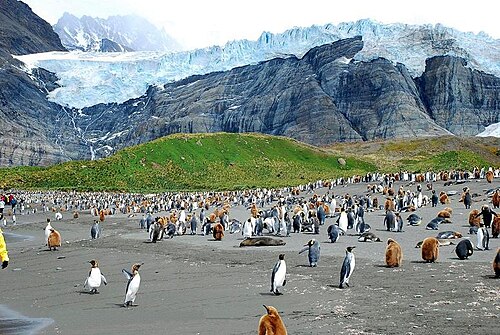
King penguin colony at St Andrews Bay, South Georgia

South Georgia

Called the "Serengeti of the Southern Ocean," South Georgia hosts over 50% of the world's southern elephant seal population and the world's largest king penguin colony at St Andrews Bay (~150,000 breeding pairs). Ernest Shackleton is buried at Grytviken, the island's former whaling station, making every visit a pilgrimage to the Heroic Age of Antarctic Exploration. The wandering albatross nests at Prion Island from November to January. Landings at Gold Harbour, Salisbury Plain, and Fortuna Bay round out one of the most biodiverse subantarctic destinations on the planet.

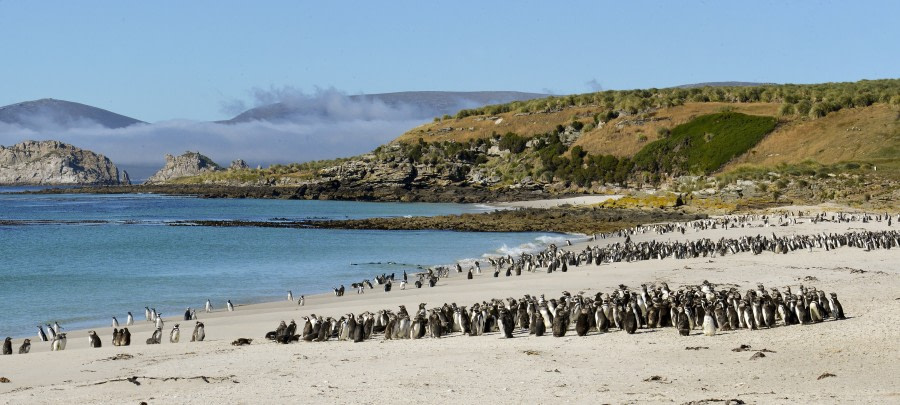
Penguin colony on a Falkland Islands beach

Falkland Islands

Five penguin species breed in the Falklands — gentoo, rockhopper, Magellanic, king, and macaroni. Black-browed albatross colonies nest at Steeple Jason and West Point Island. The islands' British heritage (settled 1833, retaken 1982) adds a geopolitical layer absent from other Antarctic destinations. Sandy beaches, tussock grasslands, and clear subantarctic light create a photographer's paradise. Most itineraries include Stanley, the world's southernmost capital, and at least one wildlife landing at a penguin colony.

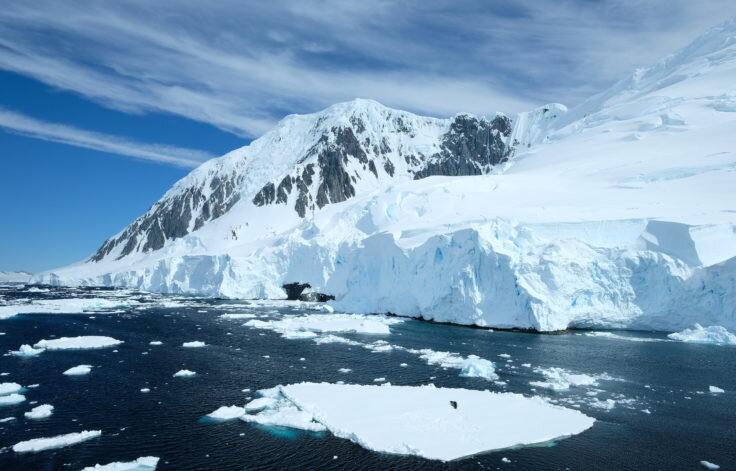
Glacial landscape with icebergs on the Antarctic Peninsula

Antarctic Peninsula

The Peninsula is the most accessible part of Antarctica and home to Adélie, chinstrap, and gentoo penguins breeding in vast rookeries. Zodiac landings bring passengers within metres of humpback whales feeding in glacial bays, and leopard seals hauled out on ice floes. Deception Island — an active caldera you can sail inside — offers a surreal contrast to white glaciers. The Antarctic Treaty System regulates all activity; IAATO limits landings to 100 passengers ashore simultaneously, protecting the pristine environment.

Dramatic ocean waves crossing the Drake Passage

Drake Passage

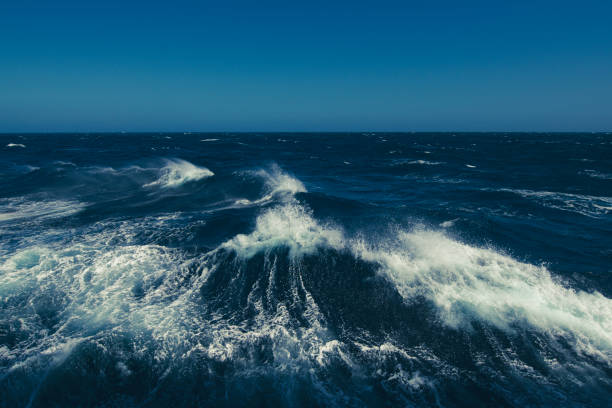
The 800 km crossing between Cape Horn and the South Shetland Islands is the world's most notorious stretch of ocean. Travellers speak of "Drake Lake" (calm) and "Drake Shake" (Force 8 swells) — you can get either. Fly-cruise options from Punta Arenas bypass Drake entirely, saving two days each way. For those who sail it, the crossing is part of the expedition: albatrosses and petrels escort the ship across the Scotia Sea, and the first iceberg sighting is a genuine arrival moment no flight can replicate.

Wildlife You Can Expect to See

The Falklands, South Georgia, and Antarctic Peninsula collectively support some of the highest densities of megafauna on Earth. Here is what to look for, and where.

Species Where to See It Best Season
King Penguin St Andrews Bay & Gold Harbour, South Georgia Year-round; chicks Dec–Mar
Southern Elephant Seal South Georgia (50%+ of world population) Oct–Mar (bulls Oct–Nov)
Wandering Albatross Prion Island, South Georgia Nov–Jan (nesting)
Humpback Whale Antarctic Peninsula, Scotia Sea Feb–Mar (peak feeding)
Gentoo Penguin Falklands & Antarctic Peninsula Nov–Feb (breeding)
Leopard Seal Antarctic Peninsula pack ice Year-round

When to Go on a Falklands, South Georgia & Antarctica Cruise

The Antarctic summer runs October to March. Each period within the season offers a distinct wildlife experience — here's how to choose.

Oct – Nov

Early Season

Lower prices
  • Pristine snow & untouched landscapes
  • Penguin courtship & breeding displays
  • Fewer fellow travellers at landing sites
  • Bull elephant seals competing for harems

Prices typically 10–20% lower than peak. Some itineraries weather-dependent.

Dec – Jan

Peak Season

Best overall
  • Penguin chicks & maximum activity
  • 24-hour daylight for photography
  • Warmest temperatures (2–8°C)
  • All wildlife active simultaneously

Highest demand — book 12–18 months in advance. Best overall experience.

Feb – Mar

Late Season

Whale peak
  • Peak humpback whale feeding activity
  • Juvenile elephant seals & fur seals ashore
  • King penguin chicks in brown down
  • Fewer tourists, more intimate landings

Prices ease from January peak. Ideal for whale enthusiasts and photographers.

1914–1917 · The Heroic Age
"Every visitor to Grytviken walks the same ground where the Heroic Age of Antarctic Exploration ended."

Ernest Shackleton is buried at Grytviken, South Georgia — a whaling station he reached on foot after crossing the island with two companions following the loss of the Endurance in pack ice.

The Endurance Expedition (1914–17): when the ship was crushed by pack ice in the Weddell Sea, Shackleton led his 27-man crew to safety on Elephant Island, then sailed an open James Caird lifeboat 1,300 km across the Scotia Sea to South Georgia.

The Shackleton Walk at Fortuna Bay is an optional activity on most South Georgia itineraries — a 12 km traverse across the island tracing the last leg of Shackleton's survival journey, ending at the Stromness whaling station.

Falklands, South Georgia & Antarctica Cruise — Common Questions

What is the best time to go on a Falklands, South Georgia & Antarctica cruise?

The Antarctic summer runs from October to March. December–January is the peak period: penguin chicks are active, daylight is nearly continuous, and temperatures are at their warmest (2–8°C). October–November offers lower prices and undisturbed landscapes; February–March delivers peak humpback whale sightings and fewer tourists at landing sites. All three periods are excellent — the right choice depends on your priorities.

How long does this expedition cruise take?

A Falklands, South Georgia & Antarctica cruise typically lasts 17–23 days. The full route from Ushuaia includes 2–3 days crossing the Drake Passage each way, 2–3 days in the Falkland Islands, 3–4 days around South Georgia, and 3–5 days on the Antarctic Peninsula. Fly-cruise options from Punta Arenas bypass the Drake crossing and shorten the voyage to 12–16 days.

What wildlife can you see on this route?

The Falklands–South Georgia–Antarctica route offers some of the highest wildlife densities on Earth. Expect king penguins (150,000+ breeding pairs at St Andrews Bay), southern elephant seals (South Georgia hosts over 50% of the world population), wandering albatross (nesting at Prion Island), humpback whales, gentoo and Adélie penguins, leopard seals, Antarctic fur seals, Weddell seals, and black-browed albatross. Most voyages record 20+ species of seabirds.

What is IAATO and why does it matter?

IAATO — the International Association of Antarctica Tour Operators — is the industry's self-regulatory body. Its most important rule: no more than 100 passengers may be ashore at any single landing site simultaneously. This limits wildlife disturbance and controls erosion at sensitive penguin colonies and elephant seal beaches. Ships carrying more than 200 passengers must rotate guests in groups, which reduces each person's individual shore time. Choosing an IAATO-member operator with fewer than 200 passengers is the single most impactful decision you can make.

Is a fly-cruise option available to bypass Drake Passage?

Yes. Several operators — including Quark Expeditions and Antarctica21 — offer fly-cruise departures from Punta Arenas, Chile. You fly to King George Island (South Shetland Islands) in approximately 2 hours and board the vessel there, saving two days of ocean crossing each way. The trade-off: you miss the Drake Passage crossing itself, which many travellers consider an integral part of the expedition experience, and the flight is subject to weather delays. For travellers who are prone to severe sea-sickness or have limited time, fly-cruise is an excellent alternative.

How much does a Falklands, South Georgia & Antarctica cruise cost?

Expect to pay USD $12,000–$25,000 per person for a full Falklands, South Georgia & Antarctica cruise in a standard cabin. Ultra-luxury operators like Silversea start at $25,000+ per person. Prices vary by vessel, cabin category, departure date, and whether fly-cruise options are included. Early-bird bookings (12–18 months in advance) typically save 10–20%. All-inclusive pricing is standard across most expedition operators — meals, Zodiac excursions, and park fees are usually included.

Ready to Explore the Southern Ocean?

Our independent rankings help you cut through the marketing and find the operator that best matches your expedition goals — whether you prioritise shore time, luxury, adventure activities, or value.

Back to Rankings ↑